


Trusted by over 15 Million Traders
The Most Awarded Broker
for a Reason
Easy Access to 1,400+ Global Assets

EURUSD
Euro vs U.S. Dollar

US500
S&P 500 (US500)

GOLD
Gold

COFFEE
US Coffee

Apple
Apple (AAPL.OQ)
-

Finance Magnates 颁发
-

Finance Magnates 颁发
-

Capital Finance International Magazine (CFI.co) 2024年颁赠
-

COLWMA 2024年颁赠
-

荣获World Finance Forex Awards 2023最佳外汇客户服务奖
-

荣获World Finance Forex Awards 2023欧洲最佳外汇经纪商奖
-

荣获World Finance Forex Awards 2023澳大拉西亚最佳外汇经纪商奖
-

荣获World Finance Forex Awards 2023拉丁美洲最佳外汇经纪商奖
-

荣获World Finance Forex Awards 2023中东最佳外汇经纪商奖
-

CFI.co于2023年颁赠
-

荣获2023年City of London Wealth Management Awards
-

荣获2022年埃及金融博览会颁赠
-

荣获2022年City of London Wealth Management Awards
-

CFI.co于2022年颁赠
-

荣获Global Forex Awards 2022 — 零售外汇 颁赠
-
2021年迪拜外汇博览会获颁赠
-

Ultimate Fintech 2021年颁赠
-

荣获2021年City of London Wealth Management Awards
-

FX168于2020年12月颁赠
-

荣获Global Business Awards 2020
-

荣获2020年City of London Wealth Management Awards
-

Capital Finance International Magazine (CFI.co)颁赠
-

Capital Finance International Magazine (CFI.co)颁赠
-

荣获2019年City of London Wealth Management Awards
-

Shares Magazine 授予 UK Forex Awards 2018
-

Capital Finance International Magazine (CFI.co)颁赠
-

Capital Finance International Magazine (CFI.co)颁赠
-

2017年伦敦财富管理奖
-

2016最佳本土 客户服务
-

中东和北非地区(MENA)增长最快的经纪商
-
2015年最佳外汇科技提供商
-
2014年最佳外汇科技提供商
-

2014年最佳外汇科技提供商
-

荣获 The Trading Show 2024年非洲 Africa Fintech 峰会颁赠
-

荣获2024年中东地区 Brokersview 颁赠
-
荣获2024年中东地区 Brokersview 颁赠
-

荣获2024年阿曼 Smart Vision 峰会颁赠
-

荣获2024年迪拜外汇博览会颁赠
-

荣获2024年迪拜 Forex Traders Summit 颁赠
-

2024年埃及 Smart Vision 峰会颁赠
-

投查查于2024年颁赠
-

Capital Finance International Magazine (CFI.co) 2024年颁赠
-

CFI.co于2023年颁赠
-

CFI.co于2023年颁赠
-

交易社区平台FOLLOWME于2022年颁赠
-
2022年迪拜Forex Expo获颁赠
-
2022年迪拜Forex Expo获颁赠
-

荣获Global Forex Awards 2022 — 零售外汇 颁赠
-

CFI.co于2022年颁赠
-

CFI.co于2022年颁赠
-

World Finance Forex Awards 2022 颁发
-

World Finance Forex Awards 2022 颁发
-

World Finance Forex Awards 2022 颁发
-

World Finance Forex Awards 2022 颁发
-
交易社区平台FOLLOWME于2021年颁赠
-

2021年埃及Smart Vision Investment Expo博览会获颁赠
-

CFI.co于2021年颁赠
-

CFI.co于2021年颁赠
-

荣获Global Forex Awards 2021 — 零售外汇 颁赠
-

荣获Global Forex Awards 2021 — 零售外汇 颁赠
-

World Finance 2021颁发
-

World Finance 2021颁发
-
FOLLOWME于2021年颁赠
-

Global Forex Awards 2021 — B2B 颁赠
-

Global Forex Awards颁赠
-

Global Forex Awards颁赠
-

CFI.co于2020年颁赠
-

CFI.co于2020年颁赠
-

荣获Global Business Awards 2020
-

World Finance Magazine 颁赠
World Finance Forex Awards 2020 -

World Finance Magazine 颁赠
World Finance Forex Awards 2020 -
FOLLOWME交易社区授予
-

Global Forex Awards颁赠
-

Global Forex Awards颁赠
-

FinTech Age Awards颁发
-

World Finance Magazine 颁赠
World Finance Forex Awards 2019 -

World Finance Magazine 颁赠
World Finance Forex Awards 2019 -

荣获 World Finance Forex Awards 2018 颁赠
-

荣获2018年埃及金融博览会颁赠
-

荣获 Shares Magazine 的 UK Forex Awards 2017 颁赠
-

荣获 World Finance Forex Awards 2017
-

2016年最佳黄金经纪商
-

2016年最佳外汇经纪商
-

2015年最佳本地客户服务
-

Global Brands Magazine 颁赠
-

Online Money Awards 2022 颁发
-

荣获2022年埃及金融博览会颁赠
-

2015最佳外汇交易平台
-

2015最佳金融交易平台
-

2013最佳创新外汇平台奖
-

2020年 Cyprus HR Awards 颁赠
-

金融行业的佼佼者
-

认证最优金牌级别
-

2014年首届亚军
-
Finance Magnates 颁发
-
Finance Magnates 颁发
-
Capital Finance International Magazine (CFI.co) 2024年颁赠
-
COLWMA 2024年颁赠
-
荣获World Finance Forex Awards 2023最佳外汇客户服务奖
-
荣获World Finance Forex Awards 2023欧洲最佳外汇经纪商奖
-
荣获World Finance Forex Awards 2023澳大拉西亚最佳外汇经纪商奖
-
荣获World Finance Forex Awards 2023拉丁美洲最佳外汇经纪商奖
-
荣获World Finance Forex Awards 2023中东最佳外汇经纪商奖
-
CFI.co于2023年颁赠
-
荣获2023年City of London Wealth Management Awards
-
荣获2022年埃及金融博览会颁赠
-
荣获2022年City of London Wealth Management Awards
-
CFI.co于2022年颁赠
-
荣获Global Forex Awards 2022 — 零售外汇 颁赠
-
2021年迪拜外汇博览会获颁赠
-
Ultimate Fintech 2021年颁赠
-
荣获2021年City of London Wealth Management Awards
-
FX168于2020年12月颁赠
-
荣获Global Business Awards 2020
-
荣获2020年City of London Wealth Management Awards
-
Capital Finance International Magazine (CFI.co)颁赠
-
Capital Finance International Magazine (CFI.co)颁赠
-
荣获2019年City of London Wealth Management Awards
-
Shares Magazine 授予 UK Forex Awards 2018
-
Capital Finance International Magazine (CFI.co)颁赠
-
Capital Finance International Magazine (CFI.co)颁赠
-
2017年伦敦财富管理奖
-
2016最佳本土 客户服务
-
中东和北非地区(MENA)增长最快的经纪商
-
2015年最佳外汇科技提供商
-
2014年最佳外汇科技提供商
-
2014年最佳外汇科技提供商
-
荣获 The Trading Show 2024年非洲 Africa Fintech 峰会颁赠
-
荣获2024年中东地区 Brokersview 颁赠
-
荣获2024年中东地区 Brokersview 颁赠
-
荣获2024年阿曼 Smart Vision 峰会颁赠
-
荣获2024年迪拜外汇博览会颁赠
-
荣获2024年迪拜 Forex Traders Summit 颁赠
-
2024年埃及 Smart Vision 峰会颁赠
-
投查查于2024年颁赠
-
Capital Finance International Magazine (CFI.co) 2024年颁赠
-
CFI.co于2023年颁赠
-
CFI.co于2023年颁赠
-
交易社区平台FOLLOWME于2022年颁赠
-
2022年迪拜Forex Expo获颁赠
-
2022年迪拜Forex Expo获颁赠
-
荣获Global Forex Awards 2022 — 零售外汇 颁赠
-
CFI.co于2022年颁赠
-
CFI.co于2022年颁赠
-
World Finance Forex Awards 2022 颁发
-
World Finance Forex Awards 2022 颁发
-
World Finance Forex Awards 2022 颁发
-
World Finance Forex Awards 2022 颁发
-
交易社区平台FOLLOWME于2021年颁赠
-
2021年埃及Smart Vision Investment Expo博览会获颁赠
-
CFI.co于2021年颁赠
-
CFI.co于2021年颁赠
-
荣获Global Forex Awards 2021 — 零售外汇 颁赠
-
荣获Global Forex Awards 2021 — 零售外汇 颁赠
-
World Finance 2021颁发
-
World Finance 2021颁发
-
FOLLOWME于2021年颁赠
-
Global Forex Awards 2021 — B2B 颁赠
-
Global Forex Awards颁赠
-
Global Forex Awards颁赠
-
CFI.co于2020年颁赠
-
CFI.co于2020年颁赠
-
荣获Global Business Awards 2020
-
World Finance Magazine 颁赠
World Finance Forex Awards 2020 -
World Finance Magazine 颁赠
World Finance Forex Awards 2020 -
FOLLOWME交易社区授予
-
Global Forex Awards颁赠
-
Global Forex Awards颁赠
-
FinTech Age Awards颁发
-
World Finance Magazine 颁赠
World Finance Forex Awards 2019 -
World Finance Magazine 颁赠
World Finance Forex Awards 2019 -
荣获 World Finance Forex Awards 2018 颁赠
-
荣获2018年埃及金融博览会颁赠
-
荣获 Shares Magazine 的 UK Forex Awards 2017 颁赠
-
荣获 World Finance Forex Awards 2017
-
2016年最佳黄金经纪商
-
2016年最佳外汇经纪商
-
2015年最佳本地客户服务
-
Global Brands Magazine 颁赠
-
Online Money Awards 2022 颁发
-
荣获2022年埃及金融博览会颁赠
-
2015最佳外汇交易平台
-
2015最佳金融交易平台
-
2013最佳创新外汇平台奖
-
2020年 Cyprus HR Awards 颁赠
-
金融行业的佼佼者
-
认证最优金牌级别
-
2014年首届亚军
-
Finance Magnates 颁发
-
Finance Magnates 颁发
-
Capital Finance International Magazine (CFI.co) 2024年颁赠
-
COLWMA 2024年颁赠
-
荣获World Finance Forex Awards 2023最佳外汇客户服务奖
-
荣获World Finance Forex Awards 2023欧洲最佳外汇经纪商奖
-
荣获World Finance Forex Awards 2023澳大拉西亚最佳外汇经纪商奖
-
荣获World Finance Forex Awards 2023拉丁美洲最佳外汇经纪商奖
-
荣获World Finance Forex Awards 2023中东最佳外汇经纪商奖
-
CFI.co于2023年颁赠
-
荣获2023年City of London Wealth Management Awards
-
荣获2022年埃及金融博览会颁赠
-
荣获2022年City of London Wealth Management Awards
-
CFI.co于2022年颁赠
-
荣获Global Forex Awards 2022 — 零售外汇 颁赠
-
2021年迪拜外汇博览会获颁赠
-
Ultimate Fintech 2021年颁赠
-
荣获2021年City of London Wealth Management Awards
-
FX168于2020年12月颁赠
-
荣获Global Business Awards 2020
-
荣获2020年City of London Wealth Management Awards
-
Capital Finance International Magazine (CFI.co)颁赠
-
Capital Finance International Magazine (CFI.co)颁赠
-
荣获2019年City of London Wealth Management Awards
-
Shares Magazine 授予 UK Forex Awards 2018
-
Capital Finance International Magazine (CFI.co)颁赠
-
Capital Finance International Magazine (CFI.co)颁赠
-
2017年伦敦财富管理奖
-
2016最佳本土 客户服务
-
中东和北非地区(MENA)增长最快的经纪商
-
2015年最佳外汇科技提供商
-
2014年最佳外汇科技提供商
-
2014年最佳外汇科技提供商
-
荣获 The Trading Show 2024年非洲 Africa Fintech 峰会颁赠
-
荣获2024年中东地区 Brokersview 颁赠
-
荣获2024年中东地区 Brokersview 颁赠
-
荣获2024年阿曼 Smart Vision 峰会颁赠
-
荣获2024年迪拜外汇博览会颁赠
-
荣获2024年迪拜 Forex Traders Summit 颁赠
-
2024年埃及 Smart Vision 峰会颁赠
-
投查查于2024年颁赠
-
Capital Finance International Magazine (CFI.co) 2024年颁赠
-
CFI.co于2023年颁赠
-
CFI.co于2023年颁赠
-
交易社区平台FOLLOWME于2022年颁赠
-
2022年迪拜Forex Expo获颁赠
-
2022年迪拜Forex Expo获颁赠
-
荣获Global Forex Awards 2022 — 零售外汇 颁赠
-
CFI.co于2022年颁赠
-
CFI.co于2022年颁赠
-
World Finance Forex Awards 2022 颁发
-
World Finance Forex Awards 2022 颁发
-
World Finance Forex Awards 2022 颁发
-
World Finance Forex Awards 2022 颁发
-
交易社区平台FOLLOWME于2021年颁赠
-
2021年埃及Smart Vision Investment Expo博览会获颁赠
-
CFI.co于2021年颁赠
-
CFI.co于2021年颁赠
-
荣获Global Forex Awards 2021 — 零售外汇 颁赠
-
荣获Global Forex Awards 2021 — 零售外汇 颁赠
-
World Finance 2021颁发
-
World Finance 2021颁发
-
FOLLOWME于2021年颁赠
-
Global Forex Awards 2021 — B2B 颁赠
-
Global Forex Awards颁赠
-
Global Forex Awards颁赠
-
CFI.co于2020年颁赠
-
CFI.co于2020年颁赠
-
荣获Global Business Awards 2020
-
World Finance Magazine 颁赠
World Finance Forex Awards 2020 -
World Finance Magazine 颁赠
World Finance Forex Awards 2020 -
FOLLOWME交易社区授予
-
Global Forex Awards颁赠
-
Global Forex Awards颁赠
-
FinTech Age Awards颁发
-
World Finance Magazine 颁赠
World Finance Forex Awards 2019 -
World Finance Magazine 颁赠
World Finance Forex Awards 2019 -
荣获 World Finance Forex Awards 2018 颁赠
-
荣获2018年埃及金融博览会颁赠
-
荣获 Shares Magazine 的 UK Forex Awards 2017 颁赠
-
荣获 World Finance Forex Awards 2017
-
2016年最佳黄金经纪商
-
2016年最佳外汇经纪商
-
2015年最佳本地客户服务
-
Global Brands Magazine 颁赠
-
Online Money Awards 2022 颁发
-
荣获2022年埃及金融博览会颁赠
-
2015最佳外汇交易平台
-
2015最佳金融交易平台
-
2013最佳创新外汇平台奖
-
2020年 Cyprus HR Awards 颁赠
-
金融行业的佼佼者
-
认证最优金牌级别
-
2014年首届亚军
-
Finance Magnates 颁发
-
Finance Magnates 颁发
-
Capital Finance International Magazine (CFI.co) 2024年颁赠
-
COLWMA 2024年颁赠
-
荣获World Finance Forex Awards 2023最佳外汇客户服务奖
-
荣获World Finance Forex Awards 2023欧洲最佳外汇经纪商奖
-
荣获World Finance Forex Awards 2023澳大拉西亚最佳外汇经纪商奖
-
荣获World Finance Forex Awards 2023拉丁美洲最佳外汇经纪商奖
-
荣获World Finance Forex Awards 2023中东最佳外汇经纪商奖
-
CFI.co于2023年颁赠
-
荣获2023年City of London Wealth Management Awards
-
荣获2022年埃及金融博览会颁赠
-
荣获2022年City of London Wealth Management Awards
-
CFI.co于2022年颁赠
-
荣获Global Forex Awards 2022 — 零售外汇 颁赠
-
2021年迪拜外汇博览会获颁赠
-
Ultimate Fintech 2021年颁赠
-
荣获2021年City of London Wealth Management Awards
-
FX168于2020年12月颁赠
-
荣获Global Business Awards 2020
-
荣获2020年City of London Wealth Management Awards
-
Capital Finance International Magazine (CFI.co)颁赠
-
Capital Finance International Magazine (CFI.co)颁赠
-
荣获2019年City of London Wealth Management Awards
-
Shares Magazine 授予 UK Forex Awards 2018
-
Capital Finance International Magazine (CFI.co)颁赠
-
Capital Finance International Magazine (CFI.co)颁赠
-
2017年伦敦财富管理奖
-
2016最佳本土 客户服务
-
中东和北非地区(MENA)增长最快的经纪商
-
2015年最佳外汇科技提供商
-
2014年最佳外汇科技提供商
-
2014年最佳外汇科技提供商
-
荣获 The Trading Show 2024年非洲 Africa Fintech 峰会颁赠
-
荣获2024年中东地区 Brokersview 颁赠
-
荣获2024年中东地区 Brokersview 颁赠
-
荣获2024年阿曼 Smart Vision 峰会颁赠
-
荣获2024年迪拜外汇博览会颁赠
-
荣获2024年迪拜 Forex Traders Summit 颁赠
-
2024年埃及 Smart Vision 峰会颁赠
-
投查查于2024年颁赠
-
Capital Finance International Magazine (CFI.co) 2024年颁赠
-
CFI.co于2023年颁赠
-
CFI.co于2023年颁赠
-
交易社区平台FOLLOWME于2022年颁赠
-
2022年迪拜Forex Expo获颁赠
-
2022年迪拜Forex Expo获颁赠
-
荣获Global Forex Awards 2022 — 零售外汇 颁赠
-
CFI.co于2022年颁赠
-
CFI.co于2022年颁赠
-
World Finance Forex Awards 2022 颁发
-
World Finance Forex Awards 2022 颁发
-
World Finance Forex Awards 2022 颁发
-
World Finance Forex Awards 2022 颁发
-
交易社区平台FOLLOWME于2021年颁赠
-
2021年埃及Smart Vision Investment Expo博览会获颁赠
-
CFI.co于2021年颁赠
-
CFI.co于2021年颁赠
-
荣获Global Forex Awards 2021 — 零售外汇 颁赠
-
荣获Global Forex Awards 2021 — 零售外汇 颁赠
-
World Finance 2021颁发
-
World Finance 2021颁发
-
FOLLOWME于2021年颁赠
-
Global Forex Awards 2021 — B2B 颁赠
-
Global Forex Awards颁赠
-
Global Forex Awards颁赠
-
CFI.co于2020年颁赠
-
CFI.co于2020年颁赠
-
荣获Global Business Awards 2020
-
World Finance Magazine 颁赠
World Finance Forex Awards 2020 -
World Finance Magazine 颁赠
World Finance Forex Awards 2020 -
FOLLOWME交易社区授予
-
Global Forex Awards颁赠
-
Global Forex Awards颁赠
-
FinTech Age Awards颁发
-
World Finance Magazine 颁赠
World Finance Forex Awards 2019 -
World Finance Magazine 颁赠
World Finance Forex Awards 2019 -
荣获 World Finance Forex Awards 2018 颁赠
-
荣获2018年埃及金融博览会颁赠
-
荣获 Shares Magazine 的 UK Forex Awards 2017 颁赠
-
荣获 World Finance Forex Awards 2017
-
2016年最佳黄金经纪商
-
2016年最佳外汇经纪商
-
2015年最佳本地客户服务
-
Global Brands Magazine 颁赠
-
Online Money Awards 2022 颁发
-
荣获2022年埃及金融博览会颁赠
-
2015最佳外汇交易平台
-
2015最佳金融交易平台
-
2013最佳创新外汇平台奖
-
2020年 Cyprus HR Awards 颁赠
-
金融行业的佼佼者
-
认证最优金牌级别
-
2014年首届亚军

Awarded BestBrokerYear After Year
CATEGORIES
News
- A collection of good and bad news affecting the foreign exchange market
- The New Zealand dollar has fallen sharply for eight consecutive trading days, wi
- ETFs significantly increase their positions in gold!
- A collection of good and bad news affecting the foreign exchange market
- On 11.5, gold surged higher and fell back to close the negative level, and the c
market analysis
Diplomatic friction escalates, analysis of short-term trend of spot gold, silver, crude oil and foreign exchange on February 2
Wonderful introduction:
Youth is a nectar made with blood drops of will and sweat of hard work - it will last forever; youth is a rainbow woven with unfading hope and immortal yearning - it is brilliant and brilliant; youth is a copper wall built with eternal persistence and tenacity - it is impregnable.
Hello everyone, today XM Forex will bring you "[XM Foreign Exchange Decision Analysis]: Diplomatic friction escalates, analysis of short-term trend of spot gold, silver, crude oil and foreign exchange on February 2". Hope this helps you! The original content is as follows:
Global market overview
1. European and American market conditions
The decline of the three major U.S. stock index futures narrowed significantly, with the Dow futures falling 0.09%, the S&P 500 futures falling 0.38%, and the Nasdaq futures falling 0.66%. Germany's DAX index rose 0.91%, Britain's FTSE 100 index rose 0.64%, France's CAC 40 index rose 0.60%, and the European Stoxx 50 index rose 0.47%.
2. Interpretation of market news
Diplomatic frictions escalated, and concerns about geopolitical risks intensified
⑴ New frictions emerged in British-Russian diplomatic relations. The British government announced that it would take reciprocal measures to revoke the accreditation of a Russian diplomat. ⑵This diplomatic incident is a continuation and countermeasure of the related incident last month. ⑶The British side clearly warned that if the other side takes further actions, it will be regarded as an escalation of the situation and will lead to corresponding responses. ⑷ This trend has intensified the market's concerns about the tense geopolitical relations between major countries and may affect risk sentiment.
Wash’s “Three Mountains”: The market is waiting for changes amid doubts and fluctuations
⑴The market is shrouded in uncertainty, from Trump’s tariff remarks to the policy tendencies of the new Federal Reserve chairman nominee Kevin Warsh, which has triggered widespread speculation and fluctuations. ⑵ Warsh has advocated in the past to reduce inflation by reducing the Fed's balance sheet. He has made it clear that "if we make the money printing press quieter, we can get lower interest rates" because the current injection of funds into the system has caused inflation to be higher than the target. ⑶ He believes that the Fed’s current balance sheet of approximately US$7 trillion is still too large, and criticizes “"The money on Wall Street is too abundant, and the credit on Main Street is too tight", advocating reallocating loose resources to lower interest rates to support the real economy. ⑷ However, its policy proposition faces huge challenges: how to convince colleagues at the Federal Open Market www.xmtraders.committee who have just stopped quantitative tightening to restart the balance sheet reduction, and how to adjust the policy stance when inflation data does not cooperate. ⑸ Analysis points out that if inflation continues to be higher than 2 % target, and the economy is performing strongly due to fiscal stimulus. It may be difficult for Warsh to gain support from most members for his interest rate cut proposal at the first meeting in June. ⑹ The market expects Warsh to change the Fed's existing "data-dependent" www.xmtraders.communication model and may cancel the quarterly economic forecast summary or the chairman's regular press conference. ⑺ Trading strategy tendency. Due to two-way operation in the recent range, the 10-year U.S. bond yield is expected to fluctuate between 4.31% and 4.14%. The market is paying close attention to the upcoming manufacturing PMI data for more clues.
Hawk signals resonate with risk aversion, and global funds are re-aligning
(1) This week, the dynamics of the British, American and European central banks and geopolitical disruptions have disturbed the market. Global asset volatility has intensified. The Bank of England is widely expected to maintain interest rates at 3.75% on Thursday. Goldman Sachs predicts that its internal vote ratio will be 7 to 2, but it may start a rate cut cycle as early as March. ⑵ At the same time, Trump nominated former Federal Reserve Governor Kevin Warsh as the new chairman, who is believed to be pursuing a more hawkish balance sheet policy. The market is worried that this may lead to easing. The end of the generation and provided support for the US dollar. (3) Risk aversion has increased significantly: the German short-term government bond auction was 3.9 times oversubscribed; U.S. bond yields fell from highs; while Indonesia faced continued withdrawal of foreign capital due to governance risks and MSCI downgrade warnings, and the stock market evaporated by more than 80 billion US dollars during the year. Remarks on the depreciation of the yen have exacerbated currency fluctuations. Weak manufacturing data in the Eurozone, especially Germany's continued contraction, have exacerbated concerns about the economic outlook. ⑸ Against this background, the collapse in www.xmtraders.commodity prices has dragged down resource currencies such as the Australian dollar and the Canadian dollar, and funds have flowed from high-risk assets to safe-haven assets such as the US dollar and core sovereign bonds.
Special risk re-pricing. Trump plans to launch a US$12 billion "Treasury Plan" to establish a strategic reserve of critical minerals
According to foreign media reports, Trump plans to launch a strategic critical mineral reserve plan called the "Treasury Plan" with an initial capital scale of US$12 billion. The plan will www.xmtraders.combine US$1.67 billion in private capital and US$10 billion in loans from the Export-Import Bank of the United States to support manufacturing www.xmtraders.companies. The industry purchases and reserves rare earths, critical minerals and other raw materials of high strategic importance and high price fluctuations. Currently, more than a dozen www.xmtraders.companies have participated, including General Motors, Stellantis, Boeing, Corning, GE Vernova and Google. The three www.xmtraders.commodity traders will be responsible for raw material procurement later on Monday.The 15-year loan will be voted on. On the same day, Trump plans to meet with General Motors CEO and mining billionaires to discuss key mineral supply chains.
New supply of green bonds, Dutch home loan securitization "adds green"
⑴ A green residential mortgage-backed security (RMBS) called "GreenLion2026-1BV" has launched the issuance process in the Netherlands. ⑵ This security is denominated in euros and follows RegS rules. The expected maturity date is January 23, 2062, including a 5-year non-callable period, and the first call date is January 27, 2031. ⑶The lead and joint bookrunner is ING, and the joint bookrunners are Bank of America and Lloyds Bank. ⑷ Its senior Class A bonds are expected to receive an AAA/Aaa rating, and the initial price guidance is 40-50 basis points above the three-month Euro interbank offered rate. ⑸ This transaction is a green bond, and the funds raised will be used for green projects that meet the requirements, reflecting the continued demand for sustainable financial products in the European market.
Inflation expectations have dropped slightly, and Brazil maintains the prospect of "high interest rates and stable growth"
⑴ A survey by the Brazilian Central Bank shows that economists' expectations for the IPCA inflation rate in 2026 have been slightly revised from 4.00% to 3.99%, and the expectation in 2027 will remain at 3.80%. ⑵ The expectations for the benchmark interest rates at the end of 2026 and 2027 remain unchanged at 12.25% and 10.50% respectively, indicating that the market believes that the central bank will maintain restrictive interest rate levels for a longer period of time. ⑶The market’s GDP growth expectations for Brazil in 2026 and 2027 are both 1.80%, which is the same as previous expectations, indicating that the economic outlook is stable but lacks upward surprises. ⑷ Economists predict that the Brazilian real’s exchange rate against the U.S. dollar will stabilize at 5.50 at the end of 2026 and 2027, and the market expects the exchange rate to remain relatively stable. ⑸The overall expectations point to a stable macroeconomic picture: inflation expectations are slightly lowered but still above the target median, the high interest rate environment will continue, economic growth is moderate, and exchange rate expectations are stable.
The manufacturing industry in the Eurozone has experienced a "***-style" recovery, and the differentiation between Germany and France has intensified
⑴The final manufacturing PMI value in the Eurozone rose to 49.5 in January. Although it was higher than 48.8 in December, it was still below the 50 boom-bust line for the third consecutive month, indicating that the industry continues to shrink. ⑵ Although production activity rebounded slightly in January after a decline in December, new orders and new export orders fell for the third consecutive month, indicating that demand remains weak. ⑶ Jobs continue to be lost and corporate purchases have decreased, but the business confidence index has risen to the highest level since February 2022, showing contradictory signals. ⑷Although input cost inflation accelerated to a three-year high, manufacturers' pricing power is limited, output prices are basically unchanged www.xmtraders.compared with the previous month, and profit margins are squeezed. ⑸The performance of major member countries is seriously divided: France’s manufacturing PMI rose to a 43-month high of 51.2, and output growth was the fastest in the past four years; while Germany’s manufacturing activity increased for the 43rd consecutive monthContraction, although the PMI rebounded to 49.1, it is still in the contraction range. ⑹The manufacturing PMIs of Italy and Spain were 48.1 and 49.2 respectively, both in a state of contraction, but Italy's downward momentum has eased slightly. ⑺ Overall, the pace of recovery in the euro area manufacturing industry is slow and uneven. The continued weakness in core economies such as Germany has offset the growth of France, which has been a drag on the overall economic momentum of the region.
The carnival of European bank stocks is over, and the wave of mergers and acquisitions has become a "mathematical necessity"
⑴ Large European banks are currently highly valued, and the top ten constituent stocks of the European Bank Stoxx Banking Index are trading at an average of 1.6 times the tangible book value in the next 12 months, which is more than three times the level of 0.5 times five years ago. ⑵ High valuations make the traditional strategy of using surplus capital for share repurchases outdated, because the value return to shareholders from repurchasing expensive shares has been significantly reduced. ⑶ Analysis points out that the current return on equity of about 11% in the European banking industry may be lower than the returns that can be brought about by mergers and acquisitions. The latter also www.xmtraders.comes with a large number of opportunities for synergistic cost savings. ⑷In an environment of generally high valuations, banks are more inclined to use their own overvalued stocks as "acquisition currency" for transactions rather than paying cash, which reduces the worry of "buying too expensive". ⑸ This partly explains the recent surge in hostile takeover attempts, as bankers are eager to find ways to unlock value from sky-high valuations. ⑹ From Italy to Spain, multiple logically feasible merger and acquisition www.xmtraders.combinations are emerging in the market, despite the political and antitrust obstacles involved. ⑺The larger background is that interest rates in the Eurozone are falling, growth in most economies is sluggish, and stock buybacks alone are stagnant. Although mergers and acquisitions are risky, they may be one of the few "growth stories" for many bank executives this year.
Global interest rate spread picture: The high-interest U.S. dollar is "siphoning", and the Eurozone has become a "negative yield" depression
⑴ The U.S. 2-year Treasury bond yield is reported at 3.524%, and the 10-year Treasury yield is reported at 4.222%, remaining absolutely high among major economies. ⑵ www.xmtraders.compared with U.S. bonds, the yields of German government bonds during the same period were 2.083% and 2.853% respectively, with interest rate differentials as high as 144.1 and 136.9 basis points, highlighting the yield disadvantage of European core assets. ⑶With the exception of Australia and the United Kingdom, the treasury bond yields of most developed countries are significantly lower than those of the United States, forming a wide range of negative interest rate spreads. ⑷ www.xmtraders.compared with German government bonds, only a few countries such as Australia, the United Kingdom and the United States have positive interest rate spreads on their government bonds, indicating a tendency for funds to gather in high-yield assets. ⑸ The yield on Japanese government bonds is the lowest among major countries, and its negative interest rate difference with U.S. bonds is the largest, exceeding 200 basis points, reflecting extreme monetary policy differentiation. ⑹ This global yield pattern continues to attract international capital flows to U.S. dollar assets, putting pressure on non-U.S. currencies and may affect the policy space of central banks.
Central and Eastern European currencies are waiting for the "central bank ruling", and the interest rate cut game has entered a critical week
⑴ The Hungarian forint strengthened on Monday, approaching a two-year high, mainly due to the pause in the rise of the US dollar and the country's central bank maintaining a hawkish stance. ⑵PolandzThe roti and the Czech crown fluctuated within a narrow range, and the market is waiting for the interest rate decisions announced by the two central banks on Wednesday and Thursday. ⑶ The market is divided on whether the Polish central bank will further cut interest rates this month, while the general expectation for the Czech central bank is to stay put, but will look for clues on whether it is ready to restart the easing cycle. ⑷ Some institutions pointed out that some Czech central bank officials have begun to discuss the possibility of cutting interest rates this year. Although domestic factors indicate inflation, external environmental shocks may provide reasons for easing. ⑸The outcome of the Polish Central Bank's decision is more ambiguous, with market expectations swinging between cutting interest rates and keeping them unchanged. ⑹ For the Czech market, the first inflation data of the new year released before Thursday’s interest rate decision will be more critical than the manufacturing survey. This data will directly affect policy expectations. ⑺Although the market has partially priced in the Czech Republic to restart the interest rate cutting cycle that was suspended last year, analysts are more cautious, with most expecting interest rates to remain unchanged this year. ⑻ The Hungarian central bank maintained its benchmark interest rate at the highest level in the European Union at 6.5% last week without disclosing an easing timetable. This stance continues to provide support for the forint.
The trust crisis spreads, and the Indonesian market is "abandoned" by global funds
⑴ Since the index provider MSCI warned that Indonesia may be downgraded to a frontier market, the Jakarta Stock Exchange has fallen by nearly 12%, and its market value has evaporated by more than US$80 billion. ⑵ Despite the authorities' www.xmtraders.commitment to reforms and the resignation of five senior officials, the market remains unsettled, with the rupiah hovering near historic lows. ⑶ Investors are avoiding Indonesia, worried that President Prabowo's spending plans and his governance are eroding the fiscal progress made since the Asian financial crisis. ⑷The proportion of foreign capital in the Indonesian bond market has dropped from nearly 40% in 2019 to just over 13%, indicating that foreign capital is continuing to withdraw. ⑸ The timing of the confidence crisis is particularly unfavorable, because against the backdrop of falling U.S. interest rates, global funds are pouring into emerging markets at an unprecedented rate, driving the rise of assets in Latin America and other places, but Indonesia has failed to benefit. ⑹ Prabowo recently appointed his nephew to the central bank's board of directors and dismissed the widely respected Finance Minister Sri Mulyani last September. These moves have heightened market concerns about policy independence and continuity. ⑺The core of the problem in the stock market lies in what brokers call "stock speculation," in which related-party transactions push up stock prices. Although the authorities have proposed increasing disclosure requirements and the proportion of free-floating shares, investors are worried about the effect of implementation. ⑻According to agency data, the number of global emerging market active funds that chose to invest in Indonesian stocks fell by 7.6% last year, and the number of funds that "overweighted" Indonesia fell by more than 17%, both of which were the largest negative changes among all countries. ⑼ In the bond market, popular school lunch and defense spending plans are putting pressure on the debt ceiling, which has remained stable since the financial crisis. Although the budget deficit is low globally, it is close to the legal limit of 3%. ⑽Investors are paying close attention to the credibility of policy implementation in the www.xmtraders.coming months to determine whether Indonesia can maintain the fiscal discipline and central bank credibility that the market is accustomed to.
Fiscal consolidation is slowing down, and India’s growth engine faces internal and external pressures
⑴ Fitch Ratings and S&P Global Ratings pointed out that India’s fiscal year 2026/27 budget shows that its pace of fiscal consolidation is slowing down and becoming more gradual. ⑵The target set by India’s Finance Minister is a debt-to-GDP ratio of 55.6% and a fiscal deficit of 4.3% of GDP. ⑶ Fitch believes that the slowed pace of consolidation is consistent with its view that it is becoming more difficult to further reduce the deficit without too much damage to GDP growth. ⑷S&P Global Ratings believes that India will achieve its deficit target for fiscal year 2027, supported by the central bank's continued large dividends and potential capital expenditures that do not meet the budget. ⑸ Both Fitch Ratings and Moody's acknowledged India's improving record of fiscal consolidation, but also pointed out that its budget deficit was larger than in the years before the new crown epidemic. ⑹ However, the quality of government finances has improved, with the overall higher deficit mainly reflecting stronger capital expenditures, while the revenue deficit is narrower than pre-epidemic levels. ⑺S&P warned that the uncertainty caused by Trump's tariff remarks is dragging down the expansion of India's export-oriented manufacturing industry. ⑻The Indian government expects economic growth in the new fiscal year to be between 6.8% and 7.2%. S&P predicts that consumer spending and public investment will help India's real GDP grow by 6.7% in fiscal 2027 and 7% in fiscal 2028.
3. Trends of major currency pairs before the New York market opens
EUR/USD: As of 21:20 Beijing time, EUR/USD fell and is now at 1.1832, a decrease of 0.18%. EUR/USD price is trading around its last trading day levels pre-market as it gains some bullish momentum after leaning on the EMA50 for support in an attempt to recover some of its previous losses in an attempt to offload some clearly oversold conditions based on the relative strength indicator, especially with the positive signals emerging there due to the impact of a bullish trendline breakout on a short-term basis and the predominance of a steep bearish correction wave.
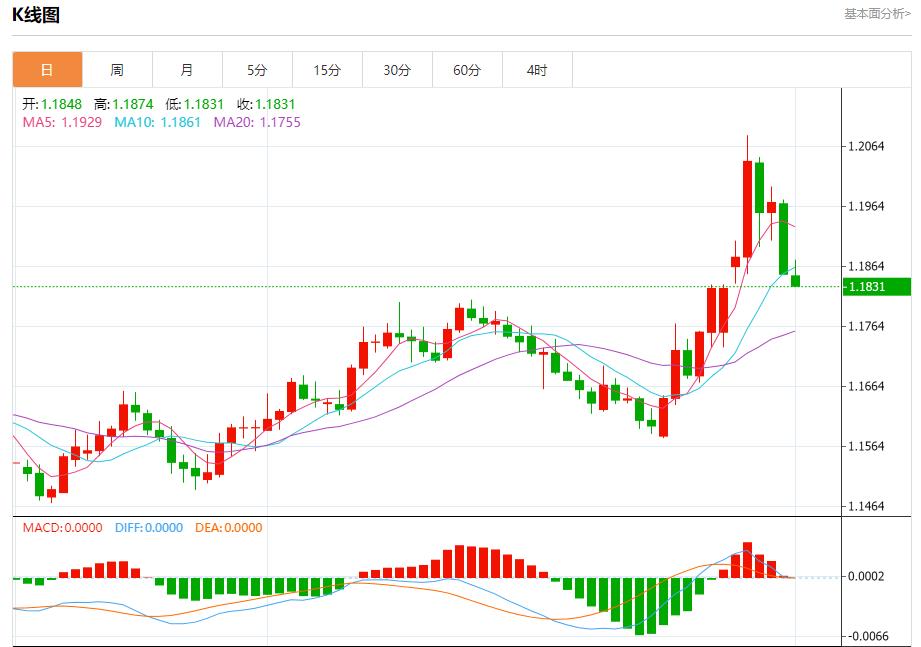
GBP/USD: As of 21:20 Beijing time, GBP/USD fell and is now at 1.3668, a decrease of 0.13%. Before the New York market opened, the GBPUSD suffered a series of losses in the last session of the session, trying to find higher lows as a basis to help it gain the bullish momentum it needs to recover, from relying on support from the EMA50 to get negative signals from the relative strength indicator. On the other hand, the main bullish trend still dominates in the short term.

Spot gold: As of 21:20 Beijing time, spot gold fell, now trading at 4735.82, a decrease of 2.56%. Gold prices gained bullish momentum on the final trading day ahead of the New York session on the strength of support at $4,550, the expected target in our morning analysis, to helpHelping it recover some of its previous losses and try to shake off some clear oversold conditions on the relative strength indicator, especially with the positive overlapping signals emerging there, as it trades below the EMA50, under continued negative pressure, reducing the chances of a full recovery in the near term, subject to a break of the secondary bullish trendline on a short-term basis.

Spot silver: As of 21:20 Beijing time, spot silver fell, now trading at 80.025, a decrease of 5.22%. Pre-market in New York, (silver) prices rose on the last trading day after we expected support at $73.00 to gain some bullish momentum, helping it recoup some of its previous losses and attempt to transfer some oversold conditions to the relative strength indicator, especially with the emergence of positive overlapping signals and the persistence of dynamic pressure represented by its exchange below the EMA50, influenced by a break of the major bullish trendline on a short-term basis.

Crude oil market: As of 21:20 Beijing time, U.S. oil fell, now trading at 61.850, a decrease of 5.14%. Before the New York market opened, (crude oil) prices fell sharply on the last trading day, exceeding the support of EMA50, strengthening the stability of the negative scenario, especially under the influence of negative technical formation in the short term, which manifested as a double top pattern, reaching the support of $61.50, our expected target in the morning. On the other hand, the price still moved along the smaller trend line in the short term, the relative strength indicator reached oversold levels, and a positive overlapping signal appeared, which may limit losses if the support is stable.

4. Institutional view
ING: It may be difficult to change the exchange rate stance at the ECB meeting, and there are downside risks to the euro
⑴ Francesco Pessole of ING said in a report that the recent strength of the euro is unlikely to be enough to prompt ECB President Christine Lagarde to change her stance on the exchange rate at Thursday's meeting. ⑵ Lagarde has repeatedly emphasized that the European Central Bank does not target the exchange rate, but will monitor the trend of the euro because of its impact on inflation. ⑶ Pessole pointed out that the recent fall of the euro against the dollar below 1.20 may have alleviated policymakers' concerns. ⑷However, the market has not yet priced in the risk of the ECB verbally expressing dissatisfaction. ⑸ Therefore, if the European Central Bank does emphasize its concerns about the strength of the euro, the euro may fall.
The above content is all about "[XM Foreign Exchange Decision Analysis]: Diplomatic friction escalates, short-term trend analysis of spot gold, silver, crude oil, and foreign exchange on February 2". It is carefully www.xmtraders.compiled and edited by the editor of XM Foreign Exchange. I hopeHelp your trading! Thanks for the support!
Sharing is as simple as a gust of wind can bring refreshing, as pure as a flower can bring fragrance. Gradually my dusty heart opened up, and I understood that sharing is actually as simple as the technology.
Disclaimers: XM Group only provides execution services and access permissions for online trading platforms, and allows individuals to view and/or use the website or the content provided on the website, but has no intention of making any changes or extensions, nor will it change or extend its services and access permissions. All access and usage permissions will be subject to the following terms and conditions: (i) Terms and conditions; (ii) Risk warning; And (iii) a complete disclaimer. Please note that all information provided on the website is for general informational purposes only. In addition, the content of all XM online trading platforms does not constitute, and cannot be used for any unauthorized financial market trading invitations and/or invitations. Financial market transactions pose significant risks to your investment capital.
All materials published on online trading platforms are only intended for educational/informational purposes and do not include or should be considered for financial, investment tax, or trading related consulting and advice, or transaction price records, or any financial product or non invitation related trading offers or invitations.
All content provided by XM and third-party suppliers on this website, including opinions, news, research, analysis, prices, other information, and third-party website links, remains unchanged and is provided as general market commentary rather than investment advice. All materials published on online trading platforms are only for educational/informational purposes and do not include or should be considered as applicable to financial, investment tax, or trading related advice and recommendations, or transaction price records, or any financial product or non invitation related financial offers or invitations. Please ensure that you have read and fully understood the information on XM's non independent investment research tips and risk warnings. For more details, please click here