


Trusted by over 15 Million Traders
The Most Awarded Broker
for a Reason
Easy Access to 1,400+ Global Assets

EURUSD
Euro vs U.S. Dollar

US500
S&P 500 (US500)

GOLD
Gold

COFFEE
US Coffee

Apple
Apple (AAPL.OQ)
-

Finance Magnates 颁发
-

Finance Magnates 颁发
-

Capital Finance International Magazine (CFI.co) 2024年颁赠
-

COLWMA 2024年颁赠
-

荣获World Finance Forex Awards 2023最佳外汇客户服务奖
-

荣获World Finance Forex Awards 2023欧洲最佳外汇经纪商奖
-

荣获World Finance Forex Awards 2023澳大拉西亚最佳外汇经纪商奖
-

荣获World Finance Forex Awards 2023拉丁美洲最佳外汇经纪商奖
-

荣获World Finance Forex Awards 2023中东最佳外汇经纪商奖
-

CFI.co于2023年颁赠
-

荣获2023年City of London Wealth Management Awards
-

荣获2022年埃及金融博览会颁赠
-

荣获2022年City of London Wealth Management Awards
-

CFI.co于2022年颁赠
-

荣获Global Forex Awards 2022 — 零售外汇 颁赠
-
2021年迪拜外汇博览会获颁赠
-

Ultimate Fintech 2021年颁赠
-

荣获2021年City of London Wealth Management Awards
-

FX168于2020年12月颁赠
-

荣获Global Business Awards 2020
-

荣获2020年City of London Wealth Management Awards
-

Capital Finance International Magazine (CFI.co)颁赠
-

Capital Finance International Magazine (CFI.co)颁赠
-

荣获2019年City of London Wealth Management Awards
-

Shares Magazine 授予 UK Forex Awards 2018
-

Capital Finance International Magazine (CFI.co)颁赠
-

Capital Finance International Magazine (CFI.co)颁赠
-

2017年伦敦财富管理奖
-

2016最佳本土 客户服务
-

中东和北非地区(MENA)增长最快的经纪商
-
2015年最佳外汇科技提供商
-
2014年最佳外汇科技提供商
-

2014年最佳外汇科技提供商
-

荣获 The Trading Show 2024年非洲 Africa Fintech 峰会颁赠
-

荣获2024年中东地区 Brokersview 颁赠
-
荣获2024年中东地区 Brokersview 颁赠
-

荣获2024年阿曼 Smart Vision 峰会颁赠
-

荣获2024年迪拜外汇博览会颁赠
-

荣获2024年迪拜 Forex Traders Summit 颁赠
-

2024年埃及 Smart Vision 峰会颁赠
-

投查查于2024年颁赠
-

Capital Finance International Magazine (CFI.co) 2024年颁赠
-

CFI.co于2023年颁赠
-

CFI.co于2023年颁赠
-

交易社区平台FOLLOWME于2022年颁赠
-
2022年迪拜Forex Expo获颁赠
-
2022年迪拜Forex Expo获颁赠
-

荣获Global Forex Awards 2022 — 零售外汇 颁赠
-

CFI.co于2022年颁赠
-

CFI.co于2022年颁赠
-

World Finance Forex Awards 2022 颁发
-

World Finance Forex Awards 2022 颁发
-

World Finance Forex Awards 2022 颁发
-

World Finance Forex Awards 2022 颁发
-
交易社区平台FOLLOWME于2021年颁赠
-

2021年埃及Smart Vision Investment Expo博览会获颁赠
-

CFI.co于2021年颁赠
-

CFI.co于2021年颁赠
-

荣获Global Forex Awards 2021 — 零售外汇 颁赠
-

荣获Global Forex Awards 2021 — 零售外汇 颁赠
-

World Finance 2021颁发
-

World Finance 2021颁发
-
FOLLOWME于2021年颁赠
-

Global Forex Awards 2021 — B2B 颁赠
-

Global Forex Awards颁赠
-

Global Forex Awards颁赠
-

CFI.co于2020年颁赠
-

CFI.co于2020年颁赠
-

荣获Global Business Awards 2020
-

World Finance Magazine 颁赠
World Finance Forex Awards 2020 -

World Finance Magazine 颁赠
World Finance Forex Awards 2020 -
FOLLOWME交易社区授予
-

Global Forex Awards颁赠
-

Global Forex Awards颁赠
-

FinTech Age Awards颁发
-

World Finance Magazine 颁赠
World Finance Forex Awards 2019 -

World Finance Magazine 颁赠
World Finance Forex Awards 2019 -

荣获 World Finance Forex Awards 2018 颁赠
-

荣获2018年埃及金融博览会颁赠
-

荣获 Shares Magazine 的 UK Forex Awards 2017 颁赠
-

荣获 World Finance Forex Awards 2017
-

2016年最佳黄金经纪商
-

2016年最佳外汇经纪商
-

2015年最佳本地客户服务
-

Global Brands Magazine 颁赠
-

Online Money Awards 2022 颁发
-

荣获2022年埃及金融博览会颁赠
-

2015最佳外汇交易平台
-

2015最佳金融交易平台
-

2013最佳创新外汇平台奖
-

2020年 Cyprus HR Awards 颁赠
-

金融行业的佼佼者
-

认证最优金牌级别
-

2014年首届亚军
-
Finance Magnates 颁发
-
Finance Magnates 颁发
-
Capital Finance International Magazine (CFI.co) 2024年颁赠
-
COLWMA 2024年颁赠
-
荣获World Finance Forex Awards 2023最佳外汇客户服务奖
-
荣获World Finance Forex Awards 2023欧洲最佳外汇经纪商奖
-
荣获World Finance Forex Awards 2023澳大拉西亚最佳外汇经纪商奖
-
荣获World Finance Forex Awards 2023拉丁美洲最佳外汇经纪商奖
-
荣获World Finance Forex Awards 2023中东最佳外汇经纪商奖
-
CFI.co于2023年颁赠
-
荣获2023年City of London Wealth Management Awards
-
荣获2022年埃及金融博览会颁赠
-
荣获2022年City of London Wealth Management Awards
-
CFI.co于2022年颁赠
-
荣获Global Forex Awards 2022 — 零售外汇 颁赠
-
2021年迪拜外汇博览会获颁赠
-
Ultimate Fintech 2021年颁赠
-
荣获2021年City of London Wealth Management Awards
-
FX168于2020年12月颁赠
-
荣获Global Business Awards 2020
-
荣获2020年City of London Wealth Management Awards
-
Capital Finance International Magazine (CFI.co)颁赠
-
Capital Finance International Magazine (CFI.co)颁赠
-
荣获2019年City of London Wealth Management Awards
-
Shares Magazine 授予 UK Forex Awards 2018
-
Capital Finance International Magazine (CFI.co)颁赠
-
Capital Finance International Magazine (CFI.co)颁赠
-
2017年伦敦财富管理奖
-
2016最佳本土 客户服务
-
中东和北非地区(MENA)增长最快的经纪商
-
2015年最佳外汇科技提供商
-
2014年最佳外汇科技提供商
-
2014年最佳外汇科技提供商
-
荣获 The Trading Show 2024年非洲 Africa Fintech 峰会颁赠
-
荣获2024年中东地区 Brokersview 颁赠
-
荣获2024年中东地区 Brokersview 颁赠
-
荣获2024年阿曼 Smart Vision 峰会颁赠
-
荣获2024年迪拜外汇博览会颁赠
-
荣获2024年迪拜 Forex Traders Summit 颁赠
-
2024年埃及 Smart Vision 峰会颁赠
-
投查查于2024年颁赠
-
Capital Finance International Magazine (CFI.co) 2024年颁赠
-
CFI.co于2023年颁赠
-
CFI.co于2023年颁赠
-
交易社区平台FOLLOWME于2022年颁赠
-
2022年迪拜Forex Expo获颁赠
-
2022年迪拜Forex Expo获颁赠
-
荣获Global Forex Awards 2022 — 零售外汇 颁赠
-
CFI.co于2022年颁赠
-
CFI.co于2022年颁赠
-
World Finance Forex Awards 2022 颁发
-
World Finance Forex Awards 2022 颁发
-
World Finance Forex Awards 2022 颁发
-
World Finance Forex Awards 2022 颁发
-
交易社区平台FOLLOWME于2021年颁赠
-
2021年埃及Smart Vision Investment Expo博览会获颁赠
-
CFI.co于2021年颁赠
-
CFI.co于2021年颁赠
-
荣获Global Forex Awards 2021 — 零售外汇 颁赠
-
荣获Global Forex Awards 2021 — 零售外汇 颁赠
-
World Finance 2021颁发
-
World Finance 2021颁发
-
FOLLOWME于2021年颁赠
-
Global Forex Awards 2021 — B2B 颁赠
-
Global Forex Awards颁赠
-
Global Forex Awards颁赠
-
CFI.co于2020年颁赠
-
CFI.co于2020年颁赠
-
荣获Global Business Awards 2020
-
World Finance Magazine 颁赠
World Finance Forex Awards 2020 -
World Finance Magazine 颁赠
World Finance Forex Awards 2020 -
FOLLOWME交易社区授予
-
Global Forex Awards颁赠
-
Global Forex Awards颁赠
-
FinTech Age Awards颁发
-
World Finance Magazine 颁赠
World Finance Forex Awards 2019 -
World Finance Magazine 颁赠
World Finance Forex Awards 2019 -
荣获 World Finance Forex Awards 2018 颁赠
-
荣获2018年埃及金融博览会颁赠
-
荣获 Shares Magazine 的 UK Forex Awards 2017 颁赠
-
荣获 World Finance Forex Awards 2017
-
2016年最佳黄金经纪商
-
2016年最佳外汇经纪商
-
2015年最佳本地客户服务
-
Global Brands Magazine 颁赠
-
Online Money Awards 2022 颁发
-
荣获2022年埃及金融博览会颁赠
-
2015最佳外汇交易平台
-
2015最佳金融交易平台
-
2013最佳创新外汇平台奖
-
2020年 Cyprus HR Awards 颁赠
-
金融行业的佼佼者
-
认证最优金牌级别
-
2014年首届亚军
-
Finance Magnates 颁发
-
Finance Magnates 颁发
-
Capital Finance International Magazine (CFI.co) 2024年颁赠
-
COLWMA 2024年颁赠
-
荣获World Finance Forex Awards 2023最佳外汇客户服务奖
-
荣获World Finance Forex Awards 2023欧洲最佳外汇经纪商奖
-
荣获World Finance Forex Awards 2023澳大拉西亚最佳外汇经纪商奖
-
荣获World Finance Forex Awards 2023拉丁美洲最佳外汇经纪商奖
-
荣获World Finance Forex Awards 2023中东最佳外汇经纪商奖
-
CFI.co于2023年颁赠
-
荣获2023年City of London Wealth Management Awards
-
荣获2022年埃及金融博览会颁赠
-
荣获2022年City of London Wealth Management Awards
-
CFI.co于2022年颁赠
-
荣获Global Forex Awards 2022 — 零售外汇 颁赠
-
2021年迪拜外汇博览会获颁赠
-
Ultimate Fintech 2021年颁赠
-
荣获2021年City of London Wealth Management Awards
-
FX168于2020年12月颁赠
-
荣获Global Business Awards 2020
-
荣获2020年City of London Wealth Management Awards
-
Capital Finance International Magazine (CFI.co)颁赠
-
Capital Finance International Magazine (CFI.co)颁赠
-
荣获2019年City of London Wealth Management Awards
-
Shares Magazine 授予 UK Forex Awards 2018
-
Capital Finance International Magazine (CFI.co)颁赠
-
Capital Finance International Magazine (CFI.co)颁赠
-
2017年伦敦财富管理奖
-
2016最佳本土 客户服务
-
中东和北非地区(MENA)增长最快的经纪商
-
2015年最佳外汇科技提供商
-
2014年最佳外汇科技提供商
-
2014年最佳外汇科技提供商
-
荣获 The Trading Show 2024年非洲 Africa Fintech 峰会颁赠
-
荣获2024年中东地区 Brokersview 颁赠
-
荣获2024年中东地区 Brokersview 颁赠
-
荣获2024年阿曼 Smart Vision 峰会颁赠
-
荣获2024年迪拜外汇博览会颁赠
-
荣获2024年迪拜 Forex Traders Summit 颁赠
-
2024年埃及 Smart Vision 峰会颁赠
-
投查查于2024年颁赠
-
Capital Finance International Magazine (CFI.co) 2024年颁赠
-
CFI.co于2023年颁赠
-
CFI.co于2023年颁赠
-
交易社区平台FOLLOWME于2022年颁赠
-
2022年迪拜Forex Expo获颁赠
-
2022年迪拜Forex Expo获颁赠
-
荣获Global Forex Awards 2022 — 零售外汇 颁赠
-
CFI.co于2022年颁赠
-
CFI.co于2022年颁赠
-
World Finance Forex Awards 2022 颁发
-
World Finance Forex Awards 2022 颁发
-
World Finance Forex Awards 2022 颁发
-
World Finance Forex Awards 2022 颁发
-
交易社区平台FOLLOWME于2021年颁赠
-
2021年埃及Smart Vision Investment Expo博览会获颁赠
-
CFI.co于2021年颁赠
-
CFI.co于2021年颁赠
-
荣获Global Forex Awards 2021 — 零售外汇 颁赠
-
荣获Global Forex Awards 2021 — 零售外汇 颁赠
-
World Finance 2021颁发
-
World Finance 2021颁发
-
FOLLOWME于2021年颁赠
-
Global Forex Awards 2021 — B2B 颁赠
-
Global Forex Awards颁赠
-
Global Forex Awards颁赠
-
CFI.co于2020年颁赠
-
CFI.co于2020年颁赠
-
荣获Global Business Awards 2020
-
World Finance Magazine 颁赠
World Finance Forex Awards 2020 -
World Finance Magazine 颁赠
World Finance Forex Awards 2020 -
FOLLOWME交易社区授予
-
Global Forex Awards颁赠
-
Global Forex Awards颁赠
-
FinTech Age Awards颁发
-
World Finance Magazine 颁赠
World Finance Forex Awards 2019 -
World Finance Magazine 颁赠
World Finance Forex Awards 2019 -
荣获 World Finance Forex Awards 2018 颁赠
-
荣获2018年埃及金融博览会颁赠
-
荣获 Shares Magazine 的 UK Forex Awards 2017 颁赠
-
荣获 World Finance Forex Awards 2017
-
2016年最佳黄金经纪商
-
2016年最佳外汇经纪商
-
2015年最佳本地客户服务
-
Global Brands Magazine 颁赠
-
Online Money Awards 2022 颁发
-
荣获2022年埃及金融博览会颁赠
-
2015最佳外汇交易平台
-
2015最佳金融交易平台
-
2013最佳创新外汇平台奖
-
2020年 Cyprus HR Awards 颁赠
-
金融行业的佼佼者
-
认证最优金牌级别
-
2014年首届亚军
-
Finance Magnates 颁发
-
Finance Magnates 颁发
-
Capital Finance International Magazine (CFI.co) 2024年颁赠
-
COLWMA 2024年颁赠
-
荣获World Finance Forex Awards 2023最佳外汇客户服务奖
-
荣获World Finance Forex Awards 2023欧洲最佳外汇经纪商奖
-
荣获World Finance Forex Awards 2023澳大拉西亚最佳外汇经纪商奖
-
荣获World Finance Forex Awards 2023拉丁美洲最佳外汇经纪商奖
-
荣获World Finance Forex Awards 2023中东最佳外汇经纪商奖
-
CFI.co于2023年颁赠
-
荣获2023年City of London Wealth Management Awards
-
荣获2022年埃及金融博览会颁赠
-
荣获2022年City of London Wealth Management Awards
-
CFI.co于2022年颁赠
-
荣获Global Forex Awards 2022 — 零售外汇 颁赠
-
2021年迪拜外汇博览会获颁赠
-
Ultimate Fintech 2021年颁赠
-
荣获2021年City of London Wealth Management Awards
-
FX168于2020年12月颁赠
-
荣获Global Business Awards 2020
-
荣获2020年City of London Wealth Management Awards
-
Capital Finance International Magazine (CFI.co)颁赠
-
Capital Finance International Magazine (CFI.co)颁赠
-
荣获2019年City of London Wealth Management Awards
-
Shares Magazine 授予 UK Forex Awards 2018
-
Capital Finance International Magazine (CFI.co)颁赠
-
Capital Finance International Magazine (CFI.co)颁赠
-
2017年伦敦财富管理奖
-
2016最佳本土 客户服务
-
中东和北非地区(MENA)增长最快的经纪商
-
2015年最佳外汇科技提供商
-
2014年最佳外汇科技提供商
-
2014年最佳外汇科技提供商
-
荣获 The Trading Show 2024年非洲 Africa Fintech 峰会颁赠
-
荣获2024年中东地区 Brokersview 颁赠
-
荣获2024年中东地区 Brokersview 颁赠
-
荣获2024年阿曼 Smart Vision 峰会颁赠
-
荣获2024年迪拜外汇博览会颁赠
-
荣获2024年迪拜 Forex Traders Summit 颁赠
-
2024年埃及 Smart Vision 峰会颁赠
-
投查查于2024年颁赠
-
Capital Finance International Magazine (CFI.co) 2024年颁赠
-
CFI.co于2023年颁赠
-
CFI.co于2023年颁赠
-
交易社区平台FOLLOWME于2022年颁赠
-
2022年迪拜Forex Expo获颁赠
-
2022年迪拜Forex Expo获颁赠
-
荣获Global Forex Awards 2022 — 零售外汇 颁赠
-
CFI.co于2022年颁赠
-
CFI.co于2022年颁赠
-
World Finance Forex Awards 2022 颁发
-
World Finance Forex Awards 2022 颁发
-
World Finance Forex Awards 2022 颁发
-
World Finance Forex Awards 2022 颁发
-
交易社区平台FOLLOWME于2021年颁赠
-
2021年埃及Smart Vision Investment Expo博览会获颁赠
-
CFI.co于2021年颁赠
-
CFI.co于2021年颁赠
-
荣获Global Forex Awards 2021 — 零售外汇 颁赠
-
荣获Global Forex Awards 2021 — 零售外汇 颁赠
-
World Finance 2021颁发
-
World Finance 2021颁发
-
FOLLOWME于2021年颁赠
-
Global Forex Awards 2021 — B2B 颁赠
-
Global Forex Awards颁赠
-
Global Forex Awards颁赠
-
CFI.co于2020年颁赠
-
CFI.co于2020年颁赠
-
荣获Global Business Awards 2020
-
World Finance Magazine 颁赠
World Finance Forex Awards 2020 -
World Finance Magazine 颁赠
World Finance Forex Awards 2020 -
FOLLOWME交易社区授予
-
Global Forex Awards颁赠
-
Global Forex Awards颁赠
-
FinTech Age Awards颁发
-
World Finance Magazine 颁赠
World Finance Forex Awards 2019 -
World Finance Magazine 颁赠
World Finance Forex Awards 2019 -
荣获 World Finance Forex Awards 2018 颁赠
-
荣获2018年埃及金融博览会颁赠
-
荣获 Shares Magazine 的 UK Forex Awards 2017 颁赠
-
荣获 World Finance Forex Awards 2017
-
2016年最佳黄金经纪商
-
2016年最佳外汇经纪商
-
2015年最佳本地客户服务
-
Global Brands Magazine 颁赠
-
Online Money Awards 2022 颁发
-
荣获2022年埃及金融博览会颁赠
-
2015最佳外汇交易平台
-
2015最佳金融交易平台
-
2013最佳创新外汇平台奖
-
2020年 Cyprus HR Awards 颁赠
-
金融行业的佼佼者
-
认证最优金牌级别
-
2014年首届亚军

Awarded BestBrokerYear After Year
CATEGORIES
News
- Multiple positive factors limited the decline in oil prices, weak economic data
- Short-term operation guide for major currencies on November 18
- Thanksgiving Day is approaching on Thursday, and the New York Stock Exchange, CM
- The divergence of U.S. PMI data makes it more difficult for the Federal Reserve
- The Reserve Bank of Australia keeps interest rates unchanged and its hawkish sta
market news
U.S. CPI rekindles hopes of interest rate cuts and resonates with Japan's intervention signals, and the strong Japanese yen's "wild surge" may be about to change
Wonderful introduction:
The breeze in one's sleeves is the happiness of an honest man, a prosperous business is the happiness of a businessman, punishing evil and hoeing an adulterer is the happiness of a knight, being good in character and learning is the happiness of a student, helping those in need and those in need is the happiness of a good person, sowing in spring and harvesting in autumn is the happiness of farmers.
Hello everyone, today XM Forex will bring you "[XM Forex Platform]: U.S. CPI revives hopes of interest rate cuts and resonates with Japanese intervention signals, and the strong Japanese yen's "surge" may be about to change." Hope this helps you! The original content is as follows:
Asian Market Trends
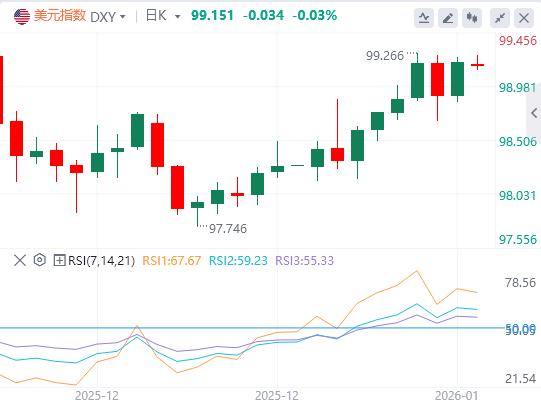
On Tuesday, the U.S. core CPI unexpectedly cooled in December. Traders increased their bets on an interest rate cut by the Federal Reserve in April. The U.S. dollar index rebounded after a short-term dive. As of now, the U.S. dollar is quoted at 99.15.
The situation in Iran:
①The EU is discussing additional sanctions against Iran.
②Trump: All meetings with Iranian officials have been cancelled, and the Iranian authorities will "pay a huge price."
③Vance is scheduled to hold a meeting with the national security team this morning to lead the formulation of a strategy against Iran.
U.S. Economy and Policy:
U.S. CPI growth remained stable in December, and core CPI was slightly lower than expected. Trump praised the inflation data and said Powell should cut interest rates significantly.
ADP Weekly Employment Report: In the four weeks ending December 20, 2025, private sector employers added an average of 11,750 jobs per week.
Federal Reserve official Musallem said: There are not many reasons to further loosen policy in the short term; he still believes that inflation risks will be more persistent than expected.
Fed’s mouthpiece: December CPI data is unlikely to change the Fed’s current wait-and-see attitude.
Other international news:
Japanese politician Takaichi Sanae expressed his intention to dissolve the House of Representatives on the 23rd and hold an early election.
OrganizationSummary of views
Citibank: The German economy is showing mixed signs of recovery, and a rebound in domestic demand may push up GDP in the fourth quarter to exceed expectations
There are certain contradictions in the recent performance of short-term indicators of the German economy. Survey and sentiment data remain low by historical standards, while export data also points to continued weakness. However, factory orders and industrial output data suggest that a recovery may have quietly begun, and that this process is more likely to be driven by domestic demand. Based on this, we estimate that Germany's GDP growth in the fourth quarter of 2025 may reach 0.3% quarter-on-quarter, which is expected to be higher than market consensus.
Overall, most economic indicators are still weak. The manufacturing PMI has been hovering at a low level for a long time, and has even declined slightly recently; the "current situation assessment" in the Ifo Economic Research Institute's business confidence survey is still close to historical lows (except for the financial crisis and the early stage of the epidemic). Exports contracted more than expected, while industrial output remained at conventional 2025 levels.
Despite the justified pessimism, the German economy appears to have shown slight improvement. The pessimism mainly stems from the lack of rebound momentum rather than continued deterioration. www.xmtraders.compared with the same period last year, sentiment indicators have improved, especially expectations. Against a backdrop of U.S. tariffs, rising www.xmtraders.competition from China and weak exports, the stabilization of industrial output could be considered a modest achievement in itself. Recent data have also exceeded market consensus expectations for further deterioration: industrial output has increased by 3.9% so far in August, and the front-loading effect of tariffs in the same period should bring downward pressure; new factory orders increased by 5.6% from October to November, and truck toll data also support the view of a year-end recovery. Therefore, we raise our fourth-quarter GDP forecast to 0.3%.
The data also shows that the German and even European economies may usher in a rebound driven by domestic demand. Industrial output has stabilized or picked up slightly amid weak exports, suggesting domestic demand is working. Factory orders data showed a sharp increase in domestic orders, suggesting that increased public investment or defense spending may have a knock-on effect, although it is still somewhat speculative. At the same time, the resilience of the labor market exceeded expectations, and the service industry continued to perform well, which is consistent with the logic of a rebound driven by domestic demand. If this trend continues, the implementation of fiscal expansion policies in 2026 will be a key factor in maintaining growth momentum.
Mizuho Securities: The U.S. debt’s 4.20% line of defense is in danger! The Federal Reserve's independence has been hit by an unprecedented attack, and Powell angrily denounced political interference
The non-farm payrolls data was lower than expected, recording 50,000 (market consensus was 70,000), and the previous value was revised downwards. However, what has attracted market attention is that the unemployment rate has dropped more than expected and is currently at 4.4% (the November data was also revised down from 4.6% to 4.5%). Although 4.4% is still at the upper end of the Fed's long-term unemployment forecast, it shows that the labor market is not slowing as quickly as imagined. Perhaps it is time for the market to test whether it is reasonable to price the end-point interest rate near 3.25% (currently about 3.17%) under current conditions. On Friday, short-end U.S. Treasury yields continued to be under pressure. Still, the failure of the 10-year U.S. Treasury yield to break above 4.20% seems counterintuitiveintuition. The question this week is this: If overall interest rate bond yields gradually move higher due to bond issuance factors and data not being as soft as expected, will investors take advantage of the decline in long-term bond prices to buy on the dip? Considering the huge scale of new bond issuance - there will be $97 billion of 3-year and 10-year U.S. bond tenders today, and there will be a wave of bond issuances by U.S. dollar financial institutions later this week after the earnings season starts, I tend to oppose the view of buying on dips. At the start of the week, the U.S. Treasury yield curve showed a steepening distortion. In addition to supply pressures, attention should also be paid to December's consumer price index and Wednesday's Supreme Court decision on tariffs. U.S. government developments have once again become the focus of news. Federal Reserve Chairman Jerome Powell is under investigation over renovations to its Washington headquarters, which he denounced as a threat to the Fed's independence. Additionally, Trump is reportedly exploring options against Iran given the high number of deaths recently reported.
Goldman Sachs: Inflation is expected to gradually fall, and the 25BP interest rate cut in March will be postponed to...
Based on the Q4/Q4 caliber, we expect GDP growth in 2026 to be 2.5% (market consensus is 2.1%); if calculated based on the full-year average, it will be 2.8%. As the drag on the economy from tariffs gradually subsides, tax cuts (about 20%) begin to have a positive pull. Tax cuts, real wage growth, residents’ wealth effects, and loosening financial conditions will jointly support solid consumption growth, while the reduction in policy uncertainty will also boost corporate investment.
In the next few years, the structure of GDP growth will be significantly different from previous business cycles: a larger part of the growth will www.xmtraders.come from artificial intelligence-related investment and productivity improvements. In the context of the current slowdown in immigration growth and declining labor supply elasticity, this growth model is less dependent on labor expansion.
We expect that by December 2026, PCE inflation will fall back to 2.1% year-on-year, core CPI will drop to 2.0%, and the overall inflation level will be about 0.3 percentage points lower than the market consensus. We believe that substantial progress has been made in reducing inflation in 2025, although the inflation data for that year still contains some mild one-time factors. Looking forward, labor market rebalancing and the fading of www.xmtraders.compensating inflation will push inflation closer to the policy target.
Indeed, the two most important indicators for forecasting inflation over the medium to long term - labor market conditions and leading indicators of rental inflation - are currently pointing to a lower inflation path than in previous cycles.
Under the policy baseline scenario, we believe that uncertainty in the labor market will prompt corporate recruitment to remain at a level "just enough to support stable GDP growth", and the unemployment rate will be roughly stable at 4.5%. Job vacancies continue to shrink, and we believe that we are currently at a weak starting point; at the same time, more and more www.xmtraders.companies are beginning to discuss layoffs and actively use artificial intelligence to reduce labor costs. Therefore, we believe that a scenario similar to the “jobless growth recovery” of the early 2000s is an alternative path that deserves to be taken seriously.
Despite the fall in inflation, there are still differences within the Fed on the policy outlook, mainly focusing on the appropriate level of terminal interest rates. We expect policymakers to eventually "move closer to the center" and cut interest rates by 25 basis points each in June and September (previously expected to be March and June), lowering the policy rate to a range of 3.00%-3.25%. On a probability-weighted basis, our Fed rate forecast is slightly below the baseline scenario and below current market pricing.
Fanon Credit: Japan’s verbal intervention has reached level 5. Will the United States’ acquiescence stop the yen shorts?
Under the intertwined influence of high-level interactions between the United States and Japan and Japan’s domestic political variables, the Japanese yen exchange rate is facing a www.xmtraders.complex game. Japanese Finance Minister Katayama Satsuki and U.S. Treasury Secretary Bessent previously exchanged views on exchange rate issues. Although both parties expressed concerns about "unilateral fluctuations in the yen," this only briefly suppressed the yen's decline. In fact, the yen is currently even weaker than the U.S. dollar, which has been under pressure due to the controversy over the Fed's independence.
The market focus has turned to the resurgence of "high market trading". Prime Minister Takaichi Sanae may push for an early election with a cabinet support rate of up to 80%. If the Liberal Democratic Party can thus regain the majority of seats in the lower house and achieve sole governance, Takaichi will gain space to implement "Sanae economics", the core of which is to slow down the normalization of monetary policy while expanding fiscal spending. This expectation triggered deep market concerns about Japan's fiscal sustainability and became a key factor in suppressing the yen.
Although rumors of early elections continue to ferment, the market has not significantly adjusted its pricing for the Bank of Japan to raise interest rates. However, the imported inflationary pressure brought about by the depreciation of the yen is forming a reverse constraint that forces the central bank to maintain the path of policy normalization. It is worth noting that Minister Katayama’s statement is only medium in the verbal intervention level (it can be ranked to level 5 out of 7), but Bessent’s “agree” gesture has important signaling significance, which implies that if the Japanese Ministry of Finance decides to intervene in the currency market, the United States is likely to adopt acquiescence.
As the U.S. dollar approaches the psychological mark of 160 against the yen, the market is paying close attention to whether Japanese officials will take substantial intervention before this critical level, recreating the exchange rate defense scenario in history. The game has entered a sensitive stage, and any clarification of policy signals may trigger a violent reaction in the exchange rate.
The above content is all about "[XM Foreign Exchange Platform]: The U.S. CPI rekindles hopes of interest rate cuts and resonates with Japan's intervention signals, and the strong Japanese yen "surges" may be about to change". It is carefully www.xmtraders.compiled and edited by the editor of XM Foreign Exchange. I hope it will be helpful to your trading! Thanks for the support!
Sharing is as simple as a gust of wind can bring refreshing, as pure as a flower can bring fragrance. Gradually my dusty heart opened up, and I understood that sharing is actually as simple as the technology.
Disclaimers: XM Group only provides execution services and access permissions for online trading platforms, and allows individuals to view and/or use the website or the content provided on the website, but has no intention of making any changes or extensions, nor will it change or extend its services and access permissions. All access and usage permissions will be subject to the following terms and conditions: (i) Terms and conditions; (ii) Risk warning; And (iii) a complete disclaimer. Please note that all information provided on the website is for general informational purposes only. In addition, the content of all XM online trading platforms does not constitute, and cannot be used for any unauthorized financial market trading invitations and/or invitations. Financial market transactions pose significant risks to your investment capital.
All materials published on online trading platforms are only intended for educational/informational purposes and do not include or should be considered for financial, investment tax, or trading related consulting and advice, or transaction price records, or any financial product or non invitation related trading offers or invitations.
All content provided by XM and third-party suppliers on this website, including opinions, news, research, analysis, prices, other information, and third-party website links, remains unchanged and is provided as general market commentary rather than investment advice. All materials published on online trading platforms are only for educational/informational purposes and do not include or should be considered as applicable to financial, investment tax, or trading related advice and recommendations, or transaction price records, or any financial product or non invitation related financial offers or invitations. Please ensure that you have read and fully understood the information on XM's non independent investment research tips and risk warnings. For more details, please click here